



Ring binders are hard-backed folders fitted with metal ring mechanisms that hold loose-leaf paper, documents, or dividers securely in place. Also known as lever arch files or ring folders, ring binders are one of the most widely used document organization tools in offices, schools, and homes worldwide — offering a durable, flexible, and reusable solution for storing and accessing paperwork. Whether you need to organize a single project or manage hundreds of pages, ring binders provide a reliable and structured system to keep your documents in order.
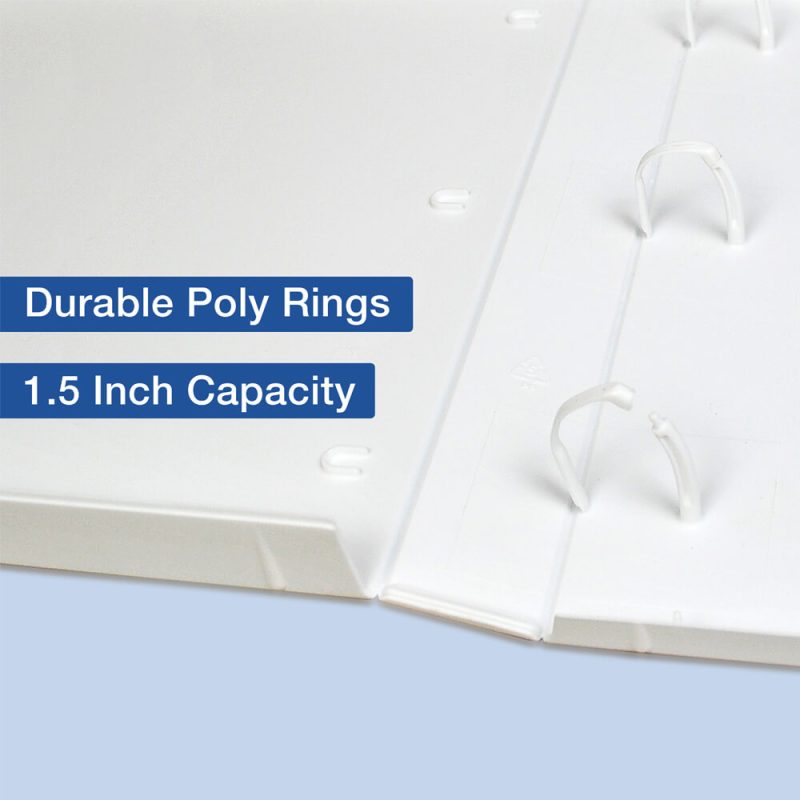
Understanding how ring binders are built helps you choose the right one for your needs. A standard ring binder consists of several distinct parts:
Rigid outer shell made from cardboard, PVC, or polypropylene
Metal rings that open and close to add or remove pages
Built-in sleeves for storing loose sheets or cards
Transparent window for inserting a title or reference label
Ring binders come in several configurations, each suited to different capacities and document types:
Student notes & coursework
Example: School Binders
Office filing & reports
Example: 3 Ring Binders
Invoice & receipt storage
Example: Tax Document and Receipt Organizer
Training manuals & guides
Example: Safety Binders and SDS Binders
Home admin & budgeting:
Example: Home Management Binders
Photo sleeves & scrapbooks
Example: Photo Binders
Ring diameter determines how many sheets a binder can hold. A 25mm (1-inch) ring holds roughly 200 sheets, while a 75mm (3-inch) ring can hold up to 650 sheets. Always match the ring size to your expected document volume to avoid overstuffing, which can damage the mechanism.
Polypropylene (PP) covers are lightweight and water-resistant, making them ideal for on-the-go use. PVC and cardboard covers offer a more traditional feel and are better suited to static filing environments.
O-rings are the most common and allow pages to lie flat. D-rings (straight-edged on one side) allow a tighter page stack and are preferred for professional presentations. Slant-D rings offer the easiest page-turning experience.
A ring binder has a metal ring mechanism that secures punched pages, keeping them orderly and preventing loss. A standard folder simply holds loose sheets between two covers without any locking mechanism, making ring binders far more suitable for larger document sets.
Ring binders are available in A4 (the most common in Europe and the UK), US Letter (standard in North America), A5, and A3. Ring diameter sizes typically range from 15mm to 80mm, depending on the required capacity.
This depends on the material. Cardboard-covered binders are generally recyclable, but PVC or polypropylene covers and metal ring mechanisms may need to be separated for recycling. Many brands now offer eco-friendly options made from recycled materials.
A standard 2-hole punch is compatible with 2-ring binders. For 4-ring A4 binders, a 4-hole punch is required. The hole spacing must match the ring spacing of the binder mechanism.
From classrooms to boardrooms, ring binders remain an essential organizational tool trusted by millions around the world. Their adaptable design, range of sizes, and ability to hold, rearrange, and protect large volumes of paper make ring binders a timeless and practical choice for anyone serious about keeping their documents organized.


